What is good design?

While this simple question has rattled around in my head for years it recently thrust itself into the forefront of my consideration.  I have come to the conclusion that I don’t really know, but to paraphrase United States Supreme Court Justice Potter Stewart “I know it when I see it”

In designing the 3D printed base for my Capacitive Touch Playground I knew I wanted to mount the Circuit Playground Express on the same board.  While I love designing in Fusion 360 I found myself bitten by the “Lazy Coders” bug and sought to save myself a bit of time by potentially remixing another model.  I had some simple requirements: 1) a secure mount for the Circuit Playground, 2) easy unobstructed access to the board and all it’s features, and 3) a small form factor that wasn’t in the way.  My intent was to find something close and modify it in mesh mixer to meet my needs.
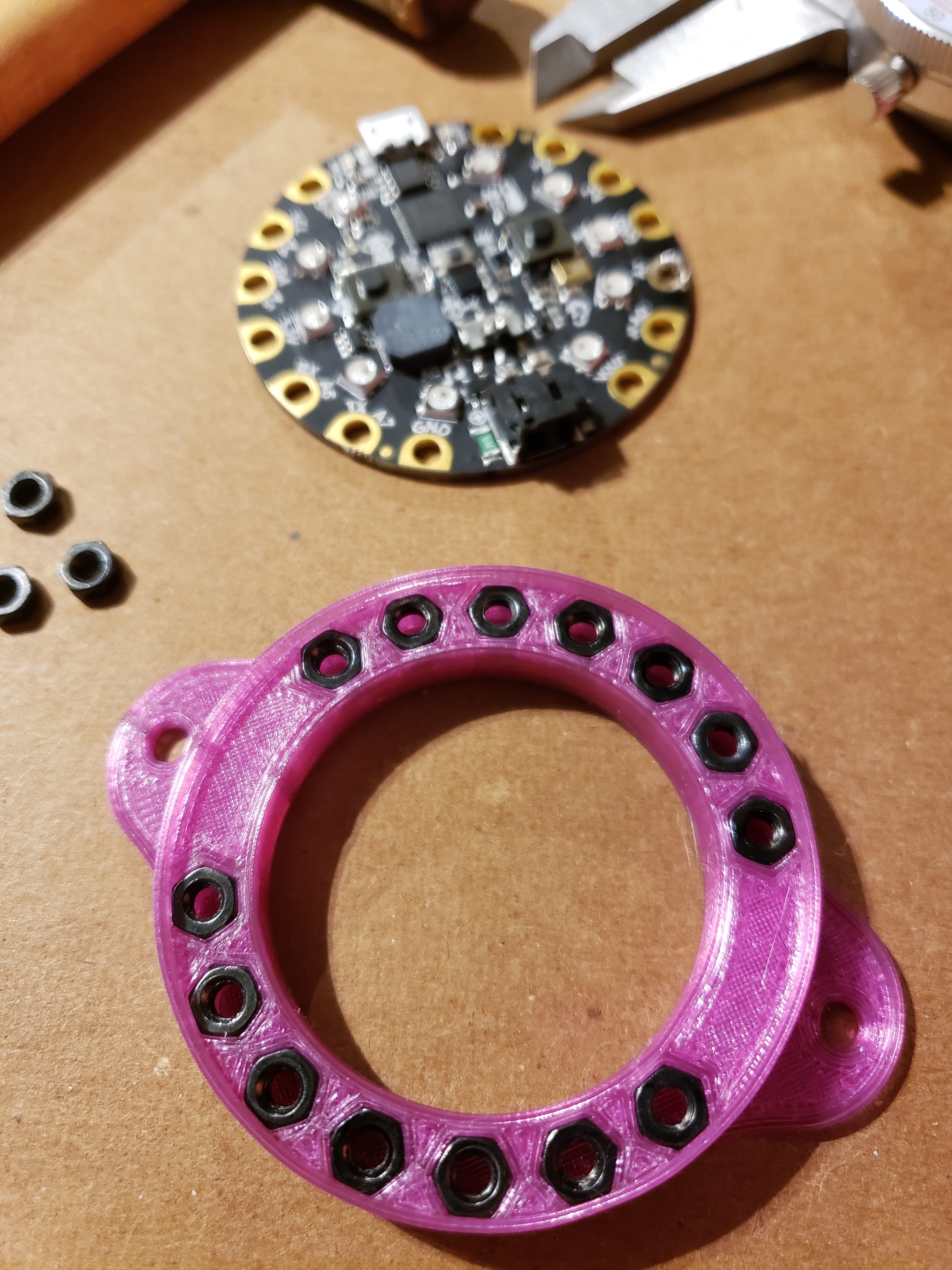
What I found was the simple and elegant model by Vladimir Mariano and it appeared to check all my boxes.  I printed it out and as soon as I dropped in the Circuit Playground I knew I was looking at a design that, for my needs, I could not beat.  It was secure, it cleverly used 3mm bolts and nuts to both simultaneously lock down the board and provide access to the functions, and it’s foot print was extremely small.  The tolerances where perfect, the nuts tapped in with the perfect force and none of features where blocked.  Functionality it was EXACTLY what I needed.

That’s not the end of the story however.  Looking at the model on my bench I was taken both by its elegance of design as well as the design decisions that were made, many of which I would NOT have made had I designed it from scratch. 
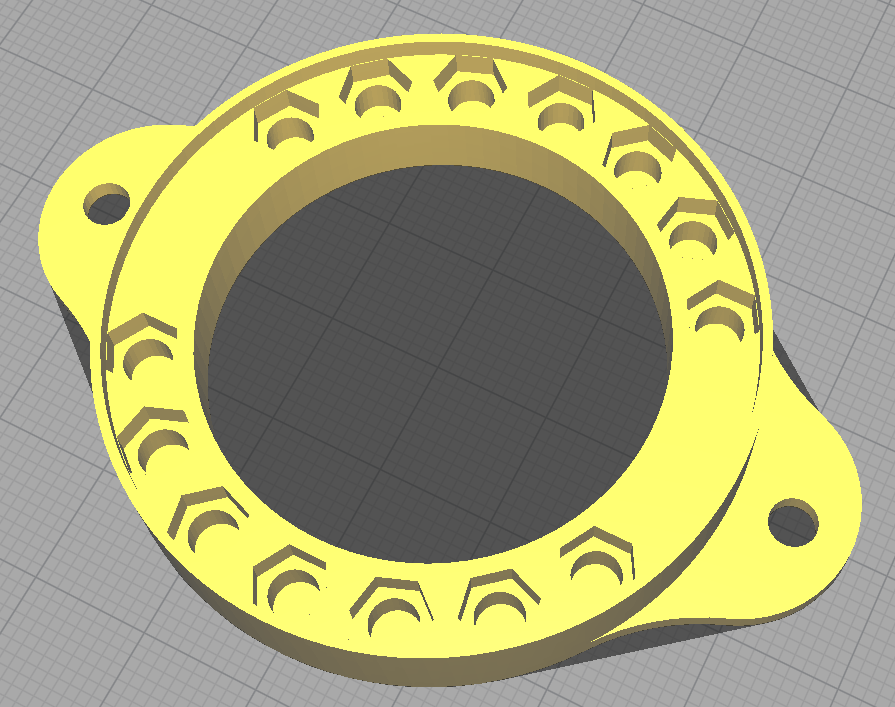
The curves and proportions of the model all complement each other in a very pleasing way.  That radius where the mounting tangs intersect with the circular body on the horizontal plane is perfect, and I know from experience it is very easy to not get that quite right.  The fact that there is NOT a fillet were that tangs intersect the vertical plane is so very pleasing.  I would have, without really thinking, added a substantial fillet there and that addition would have detracted from the design as a whole.  The overall height of the model is larger than I would have designed and the diameter less, but again I would have been wrong.  While the sum of my changes would not have altered the functionality of the model, the elegance of the design would have been reduced.

Vladimir’s design is, for my needs, perfect and while I still can’t define what “Good design is” I know that I have seen it and, though careful study, am starting to understand some of the factors.
The Value of Disassembly

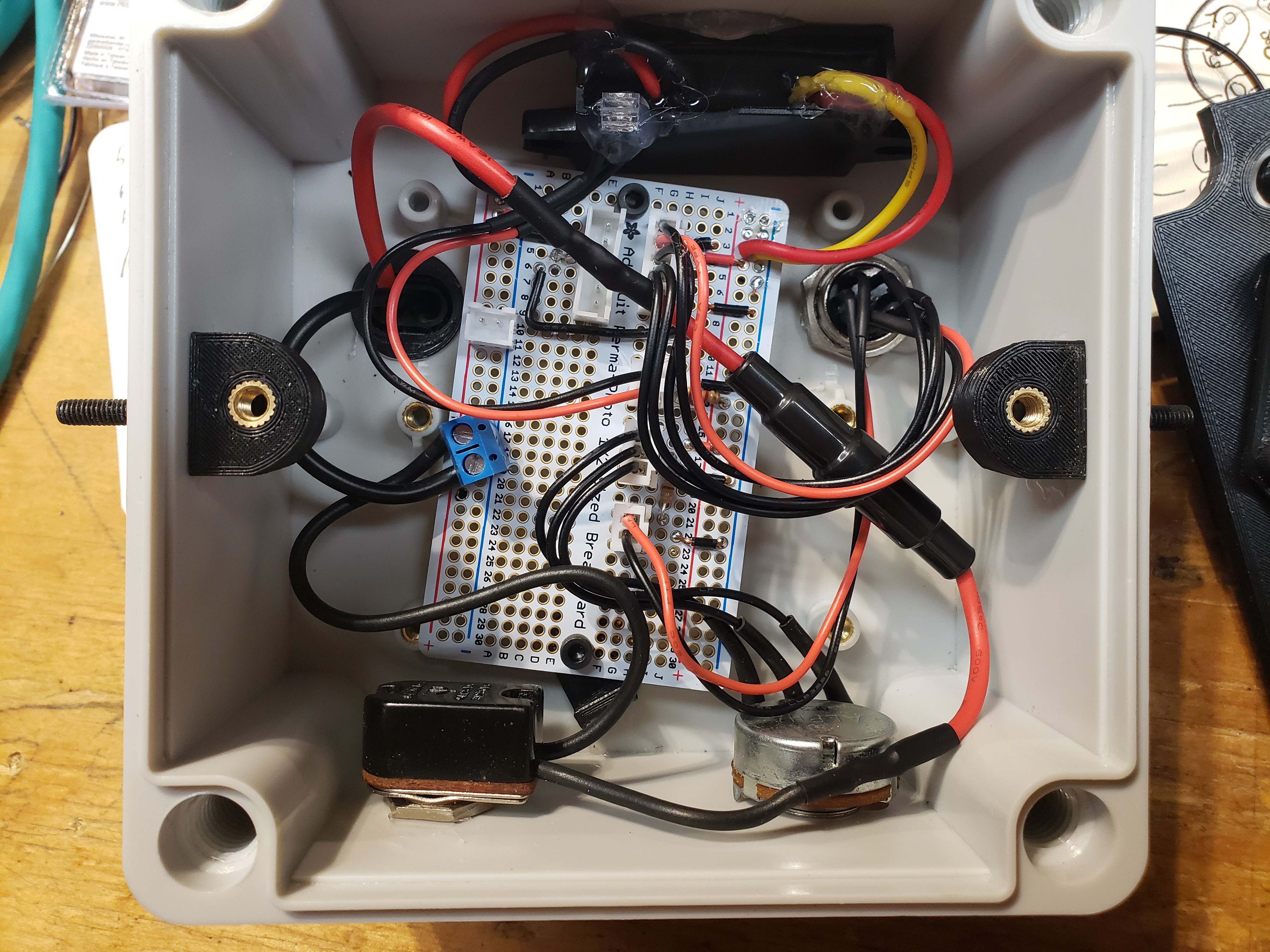
A project box using threaded inserts and JST connectors to make everything swappable.

One of the design principles I have grown to value immensely is that of designing for disassembly. Prioritizing bolts, threaded inserts, and JST connectors over glue or rivets, while a significant upfront investment, has payed huge dividends over time. On many projects I have lost count of the number of “dry fitting’s” I have ended up doing, and the ability to retro fit an older project as interests and skills change is priceless.

Epoxy, super glue, hot melt, rivets, solder, etc. all are wonderful tools that that have their place in our bag of tricks, but I find they should be used intentionally. Too often as a younger man they where my go-to methods of fastening, and in end they caused more frustration and self imposed limitations as the design process wound its way forward.

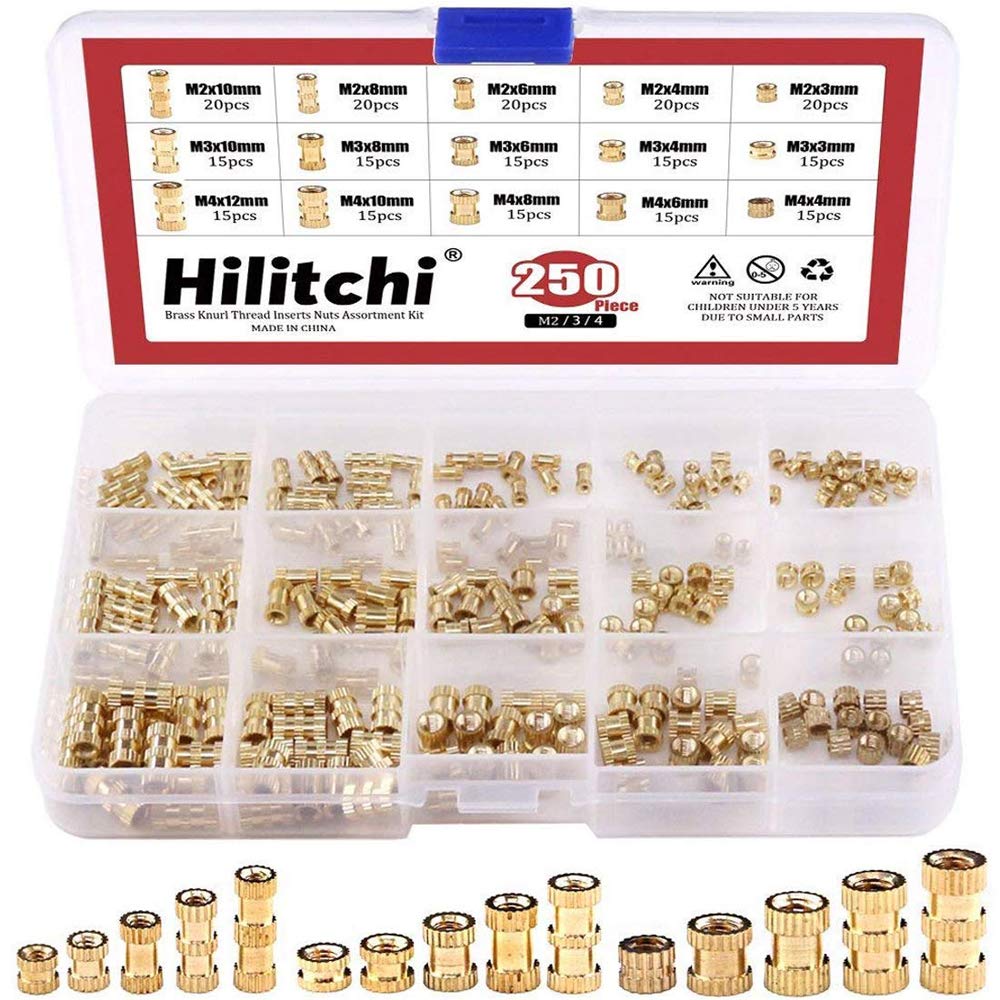
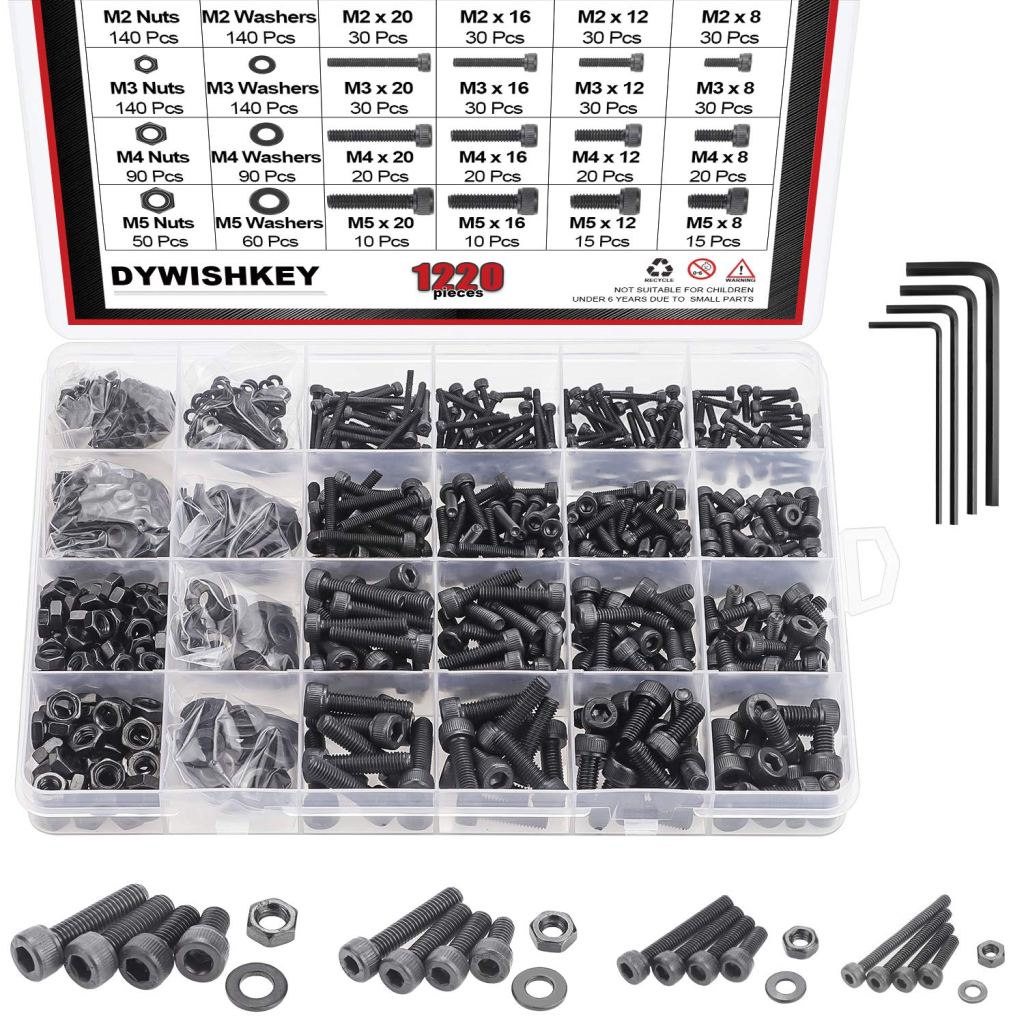
A nice selection of 2-4 mm bolts and threaded inserts are a dream

For smaller 3D printed projects an assortment of 2-4mm bolts and threaded inserts is invaluable. Learning to design with these approaches has a low barrier to entry, they do not add significant bulk or weight to your project and with a few twists of an allen wrench you can drop in a new part. These fasteners provide more than enough strength for printed parts and as your choice of materials increases in tensile strength there is almost always an appropriately strong fastener to use.

For electronics and wiring looms, JTS and Servo connectors are just the ticket. They do require some special crimping tools and a few extra solder steps but the flexibility to provide is worth many times more than any inconvenience. These connectors do require a custom tool and a bit of practice to get the hang of but there are a plethora of very good videos on Youtube on just about any type of connector, and if you are reading this I assume that the idea of picking up a new tool is more exciting than it is daunting.

As you design you next project think about designing for disassembly, you may be very surprised at the opportunity that present themselves.

The Beginning


DPL Gear started with, of all things, hammocks!  In the early 2000’s I got interested in trying to both lightening my camping load and improve the comfort of my outdoor adventures.  After quite a bit of trial and error I found that hammocks where the answer, however the cost of the gear on the market at the time was staggering. Given my “Maker” personality and the fact that my mother made sure I knew my way around a sewing machine I set off to again make the things I wanted.   I did a lot of research, made a few prototypes, ordered some high quality raw materials, and before I knew it I had the perfect kit including a hammock, suspension, rain fly, bug net, and a set of down quilts.  It all fit in a small dry bag and subsequent adventures proved my handily work would keep me comfortable through summer thunderstorms, biting insect hatches, and long subzero winter night.  Every piece was custom fit for purpose and the project provided a wealth of learning opportunities at a fraction of the retail price.

Ausable River Michigan USA

Before long friend wanted to purchase similar kits and suggestions about starting a company started flying around. The idea of turning my hobby of making things for my own interest and use into a business sounded very much like a great way to take all the joy out of something I loved doing. The trappings of production, marketing, and sales would kill the relaxation, excitement, and contentment I got from simply making the things I wanted. However, given that most people seem to place a much higher value on the quality of the Brand than they do the Quality of product, the idea of a “Company” that makes great, un-purchasable, products seemed the ultimate in-joke between my friends. As such DPL Gear was born, my friends became “Brand Ambassadors” (given free products of course) and over the years I started identifying all my private work as just another product in the nonexistent DPL Gear catalog.